The FA
Discipline Fast Track

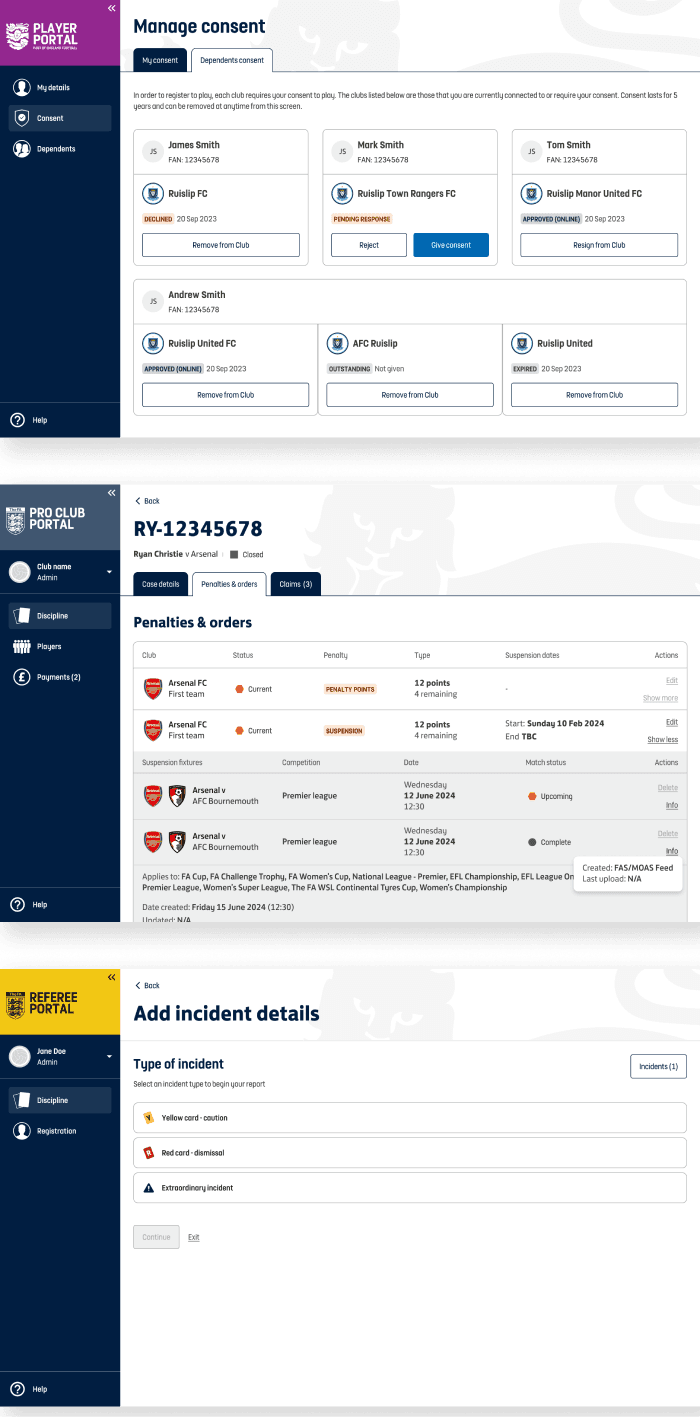
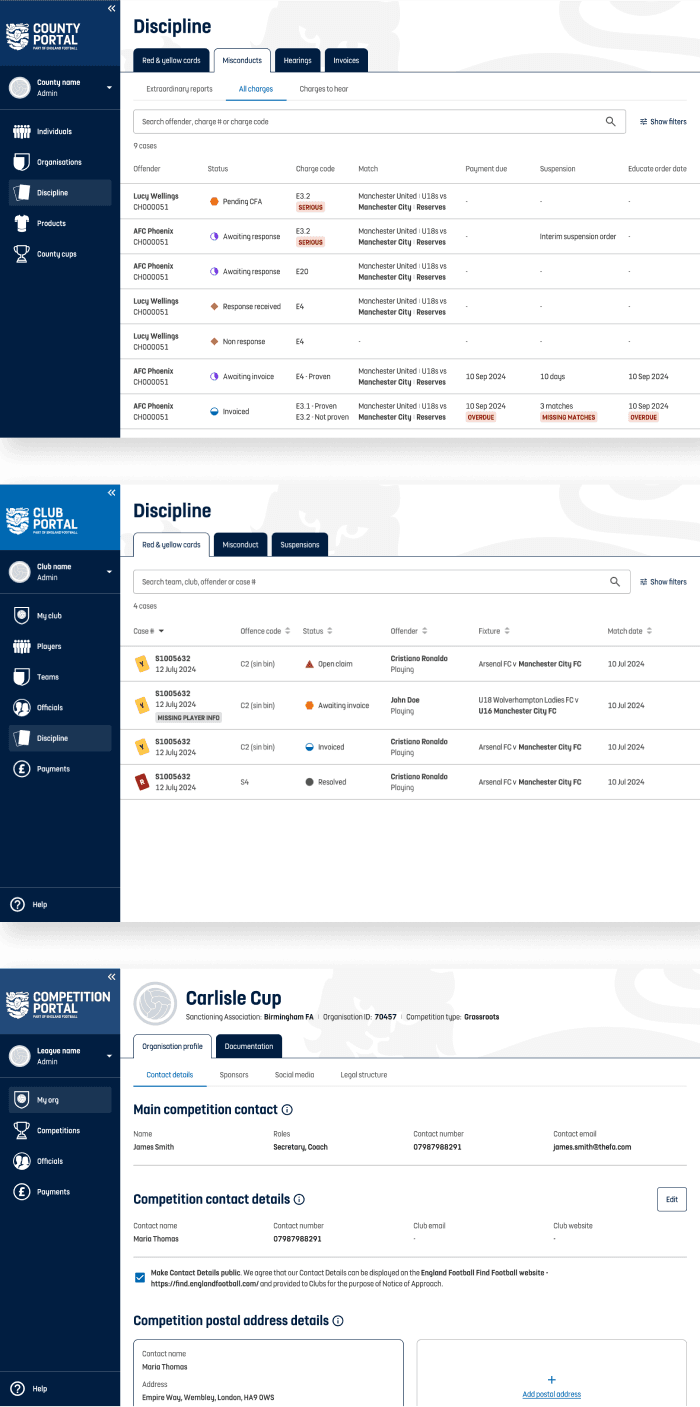

Project details

The Football Association (The FA) governs football in England and is responsible for a wide variety of activity, including developing and promoting participation at local grassroots levels, running iconic competitions like The FA Cup and supporting national teams at the FIFA World Cup.
In my role as a Product Designer I led ideation, user validation, scoping and design activity for the 'Discipline Fast Track' initiative which was deployed to production across two FA products in early 2026, helping to save over $900,000 in annual costs and cut case processing time by 30%.
The Problem
Grassroots football in England is big… really big. With over 18,000 registered clubs and 1.7 million registered players, effectively governing the game carries with it an immense administrative burden.
A large share of this relates to the discipline process, when incidents occur on the pitch, The FA runs a formal process to investigate incidents and issue fines and other sanctions. This process is inherently rigid and time-consuming, meaning both FA staff and club officials spend countless hours processing incidents, costing significant time and money.
Project goals
Identify opportunities to streamline the discipline process to save clubs and The FA time and money
Scope, design and build identified opportunities within The FA's product suite
One of the strategic focuses outlined in our divisional product strategy was to 'Minimise duplication and maximise value' for one of our key audiences, 'Frustrated administrators'. Research had shown us that this group is left frustrated by the sometimes fragmented and tedious digital ecosystem offered by The FA, meaning they spend substantial time on repetitive admin tasks.
Within FA systems, our data indicated that the discipline process was a significant time drain, with each case taking, on average, 10 days to be processed from case submission to resolution, indicating there was a significant opportunity space to be addressed to drive toward our strategic goals.
The project commenced via consultation workshops with key stakeholders in the discipline, grassroots & digital divisions. These involved analysing product data and combining it with qualitative feedback through short interviews with both internal and external users. The group developed a number of problem statements, the one in question reads as follows:
County and club administrators are time poor and spend significant amounts of time processing low level disciplinary cases that offer little upside to either party
Following the definition of the problem space, our next workshop focused on exploring potential solutions. To facilitate this process, I developed a series of 'How might we?' statements which were presented to the group during an ideation session.
I used Miro and asked stakeholders to drop potential solutions under our HMW statements, followed by discussion and a dot-voting exercise. Solutions didn't necessarily have to be digital, knowing that constraints like this can hinder creative ideation and that the group might produce initiatives that could be implemented in other areas of the organisation via process or regulation updates.
The most popular idea (by far) was the following:
Allow clubs to pay fines upfront for non-serious cases, essentially avoiding the discipline process alltogether. Kind of like how a parking fine can be cheaper if you pay upfront!
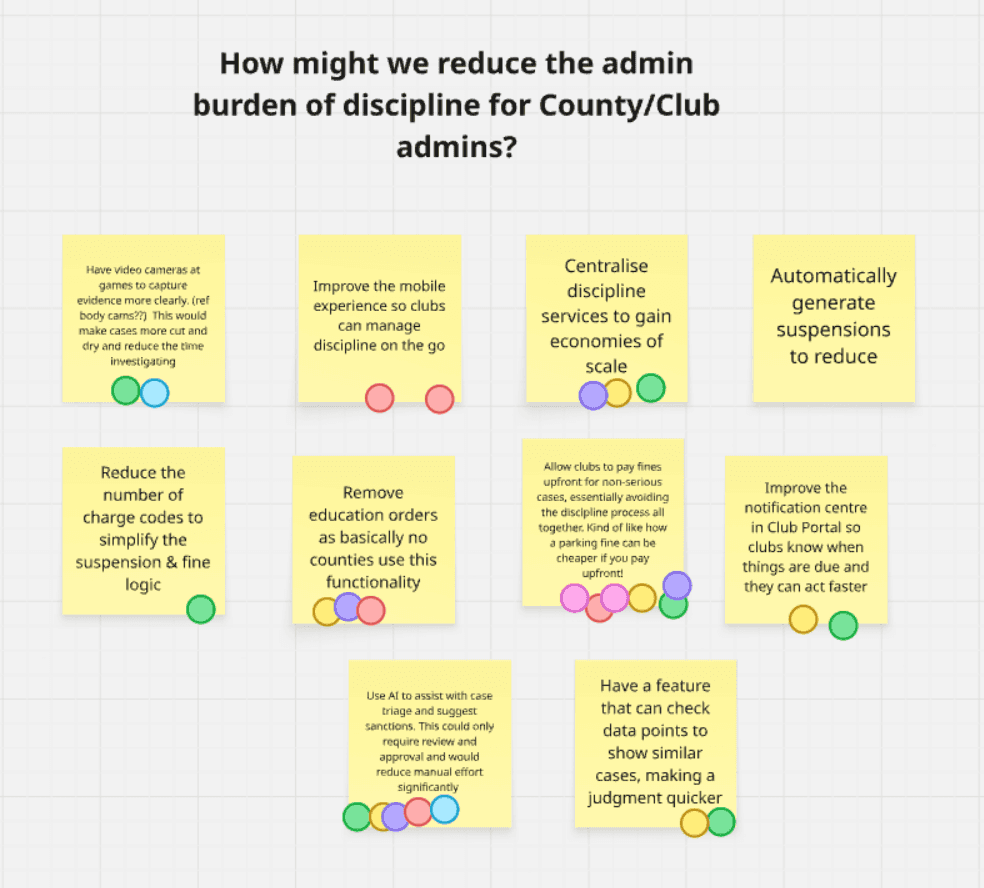
Ideation and dot voting for one of the 'How might we?' statements
Given the breadth and complexity of The FA, it was important at this stage to validate these initial concepts further beyond initial popularity. The ideas were colour-coded as either 'Non-digital', 'Digital' or 'Combination' to inform how relevant and contained each idea would be and then plotted on a value-effort matrix to help with some high-level prioritisation. This step was also useful in prompting discussions around other business dependencies.
Through this process, 'Discipline Fast Track' remained the standout concept and was thus progressed to the user validation stage.
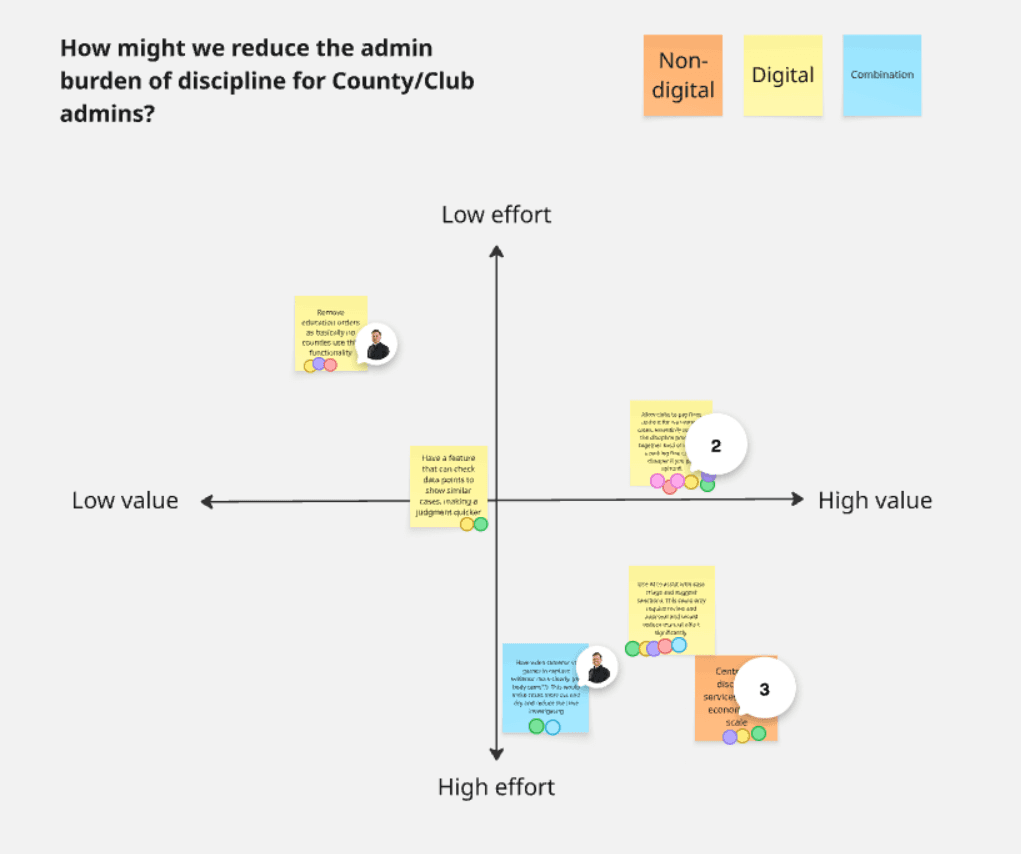
Initial concepts mapped on a value-effort matrix
Before committing roadmap space to the initiative, it was important to understand appetite for the feature among club administrators and the wider discipline officer network.
Using our 'Platform for Football' design system, I was quickly able to develop some medium-fidelity prototypes to indicate how the process might look. During a round of eight 1:1 sessions with users, these concepts were presented for feedback and exploration.
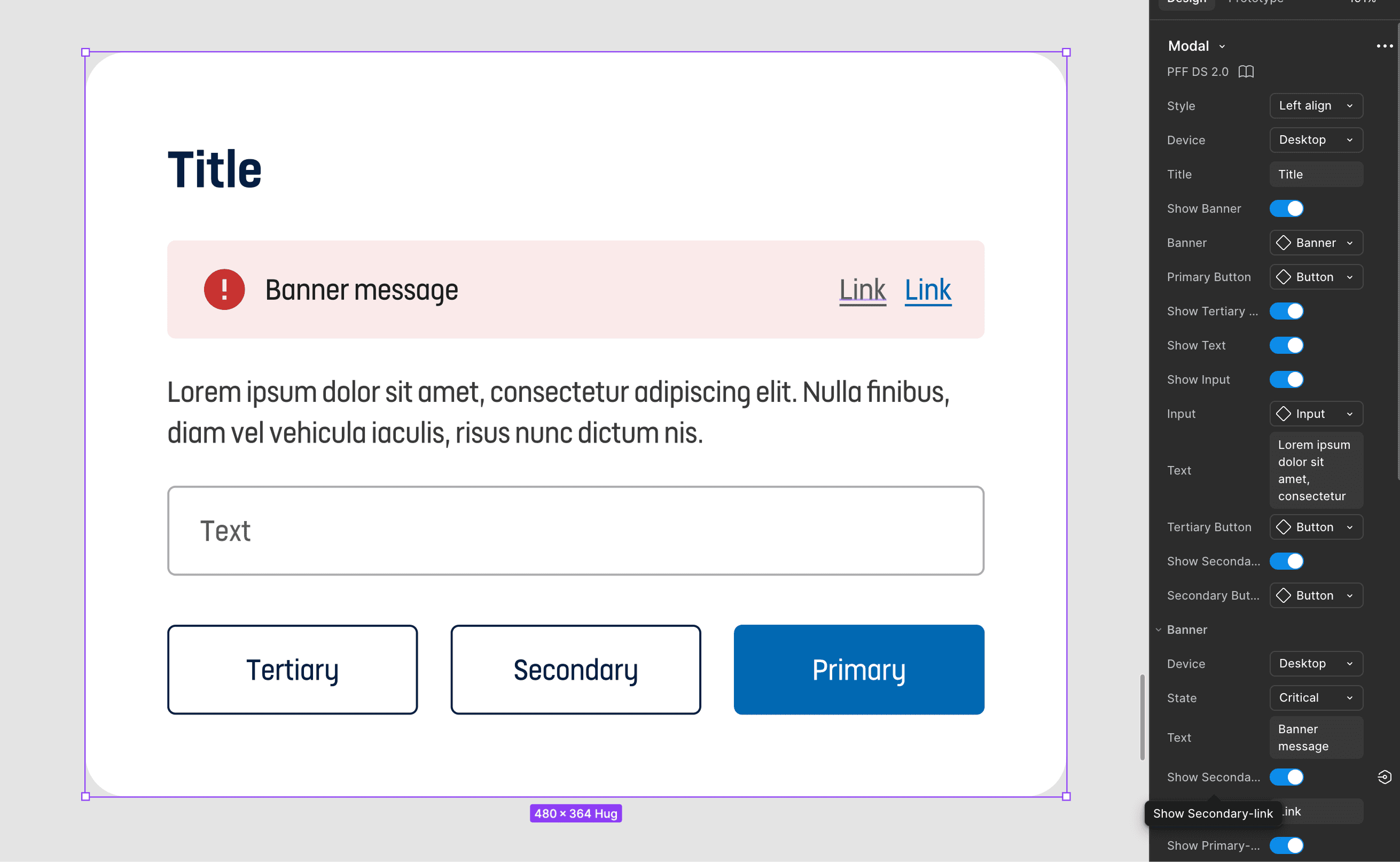
Components within the 'Platform for Football' design system unlocked rapid prototyping
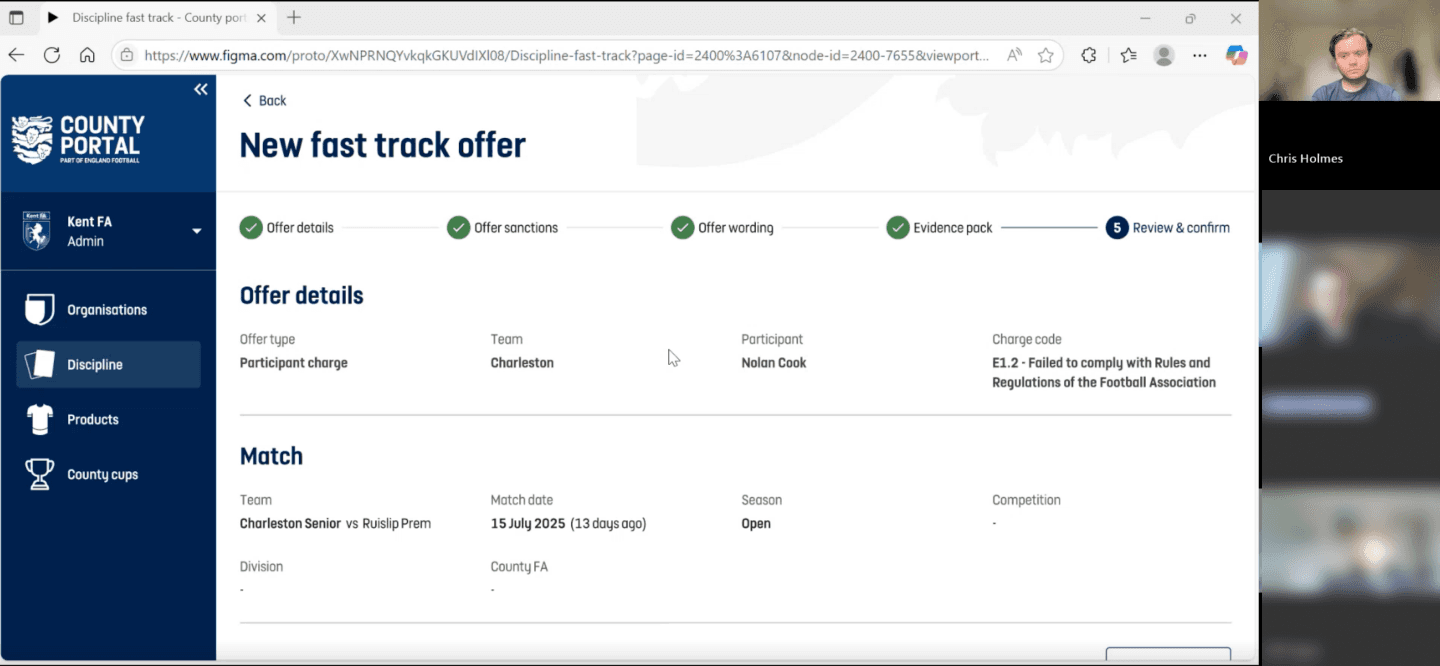
User sessions helped validate the concept and gather early-stage feedback on the UX
The initial round of validation received overwhelmingly positive feedback, with both clubs and county administrators seeing tangible value in the time saved. I was also able to capture the following key considerations for the detailed design phase:
Familiar UX patterns
Where possible, follow and replicate UX design patterns utilised within the existing discipline management process.
Break down into manageable steps
Introduce a 'stepper' component into the UX to break down a lengthy process into manageable steps. This also helped to manage data dependencies across steps. This approach was one of the few departures from the current experience.
Clearly signpost key information
County admins advised that clubs can often skim over discipline cases and miss key details, therefore, it was important for us to very clearly signpost 'Fast Track' cases & their unique sanctions.
Following the initial validation phase, I helped produce key scoping deliverables:
Product requirements document (PRD)
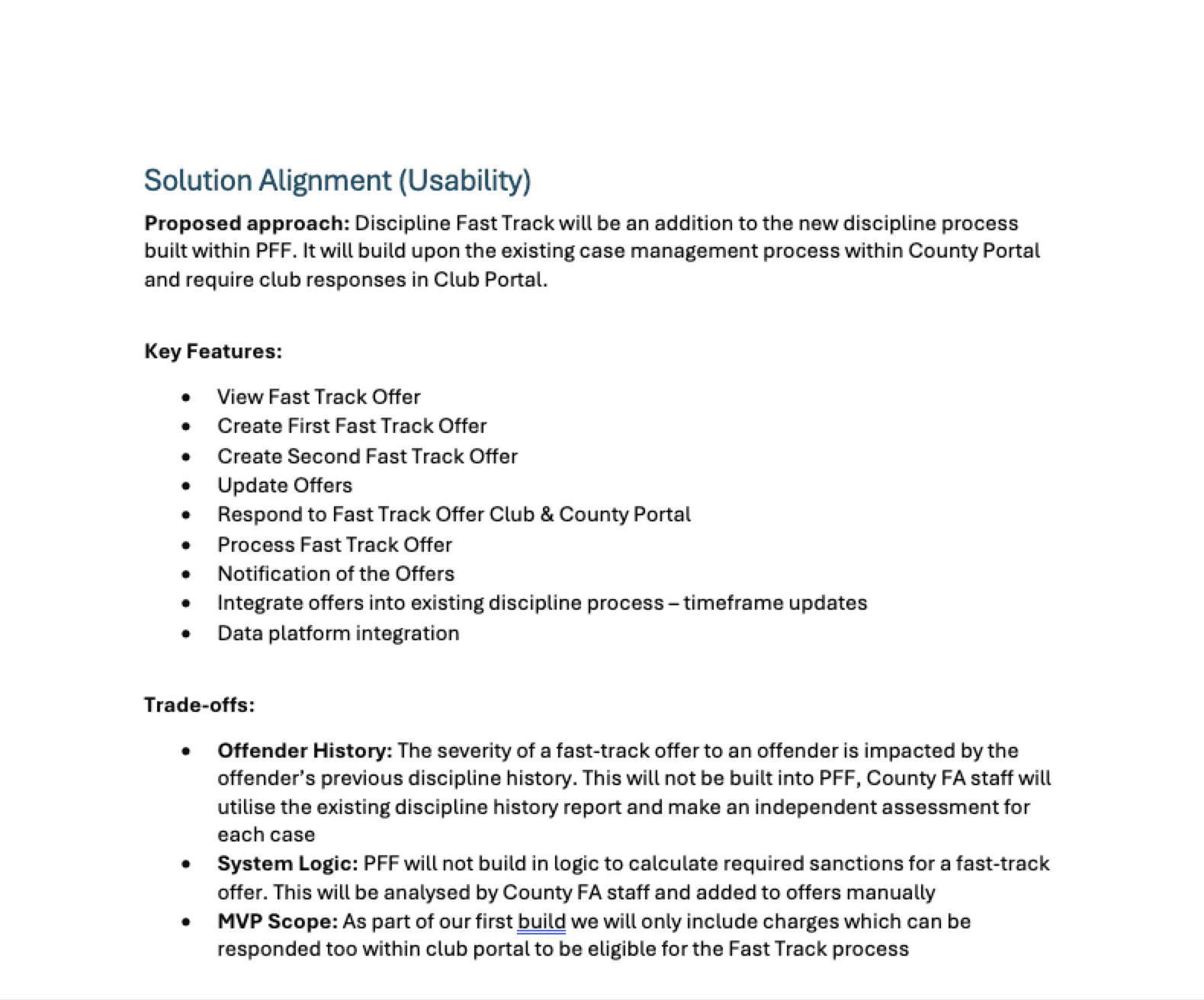
Essential in gathering key stakeholder alignment on problem areas, key assumptions, and features.
Informed technical estimation.
Defined success criteria.
Detailed user flows & information architecture
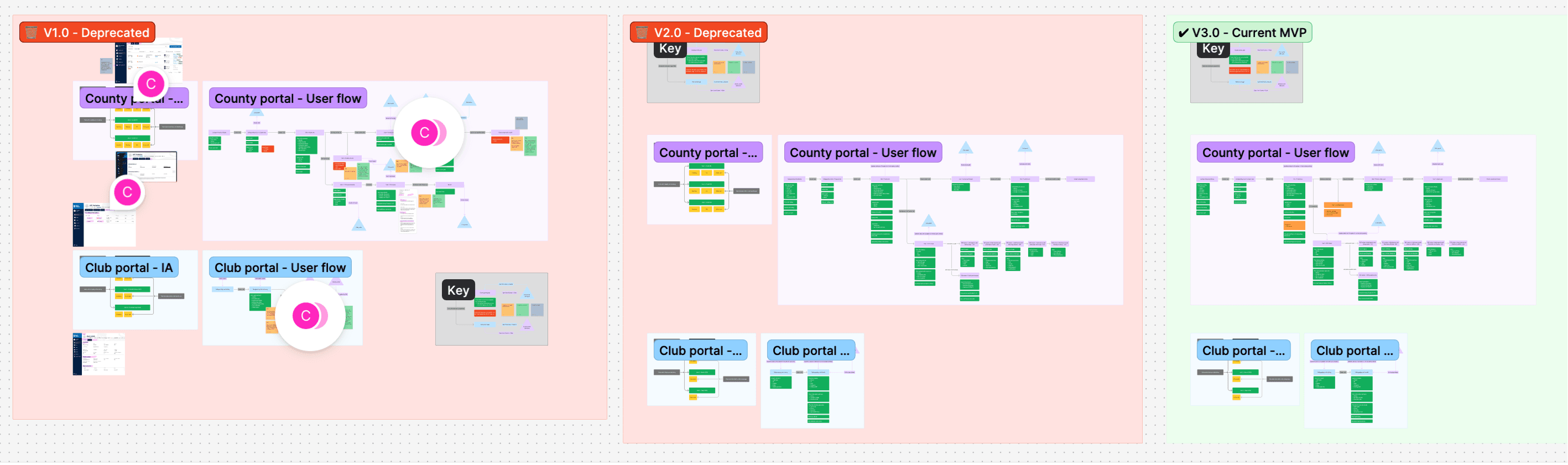
Informed back-end architecture structure, based on the optimal user experience
Outlined API requirements for further scoping
High-fidelity UI designs & prototypes
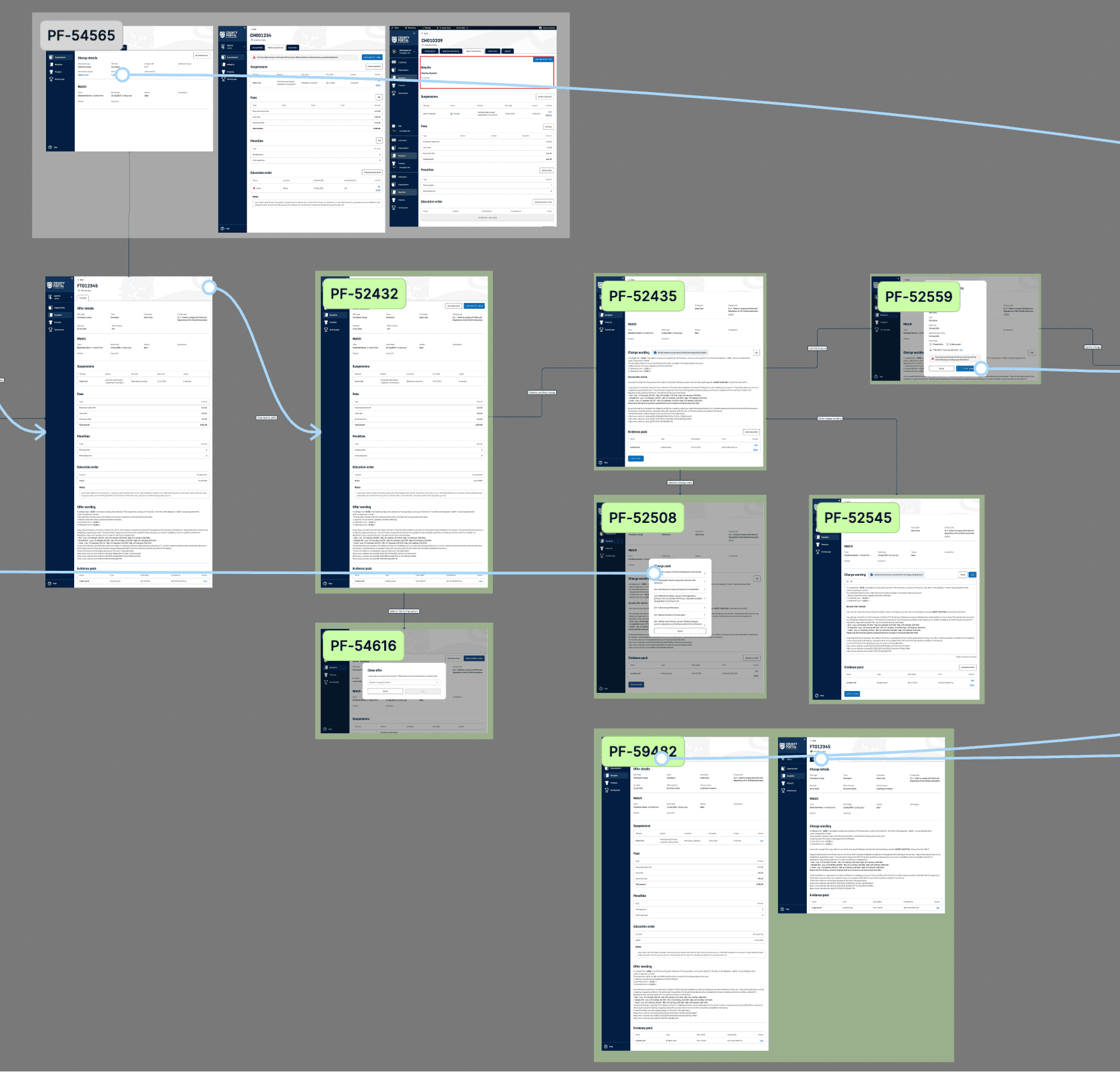
Pixel-perfect, annotated designs ready for developer hand-off.
Validated with real users and iterated based on feedback.
A walkthrough of the product in the pre-production environment

Impact
Reduced annual FTE cost of discipline staff by $270,000 and hearing costs of $708,000
Reduced case processing time from 10 days to 7 (30%)
33% uplift in users agreeing the discipline process is 'Easy to use' as part of our CSAT survey
Key learnings
Technical leads could have been involved earlier in the process. Additional user and business context would have helped with their estimation.
Scope was eventually reduced and the core user experience simplified after multiple rounds of stakeholder consultation. Time could have been saved if business stakeholders were challenged by asking "why?" to some of their preconceptions about the right solution earlier in the discovery process.
